

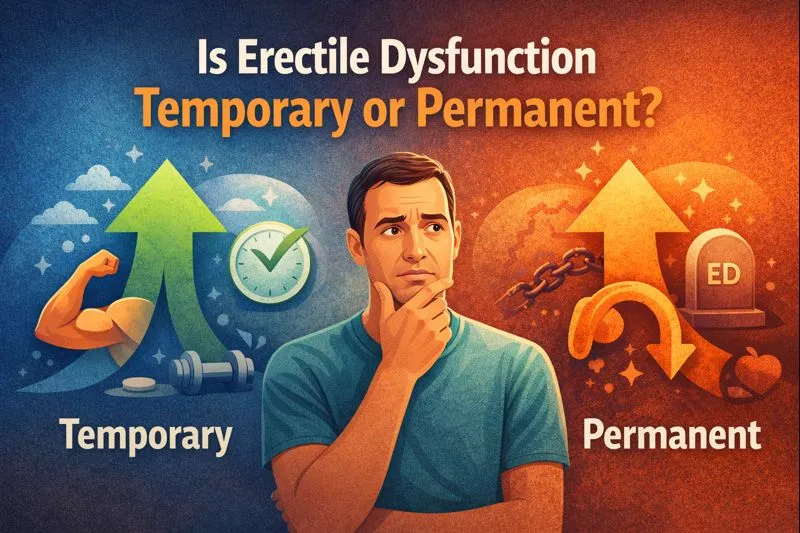
Erectile dysfunction (ED) is something many men encounter at some point in life. When it happens, it’s natural to wonder whether it’s just a temporary phase or a long-term issue. The reality isn’t always straightforward. In many cases, ED is not permanent and may improve once the underlying factors are identified and managed.
Getting a clear understanding of why ED occurs is often the first step toward dealing with it confidently and moving forward.
What Erectile Dysfunction Really Means
Erectile dysfunction refers to ongoing difficulty getting or keeping an erection firm enough for sexual activity. Almost every man experiences erection problems occasionally, especially during times of stress or fatigue. Occasional issues do not automatically mean ED.
ED is usually considered a concern only when erection problems happen regularly and begin to affect confidence, relationships, or quality of life.
When Erectile Dysfunction Is Temporary
In many situations, ED is short-term and linked to temporary factors. Once these factors improve, erectile function often returns naturally.
Common temporary causes include:
- Stress or mental pressure
- Tiredness or lack of sleep
- Alcohol use
- Emotional or relationship tension
In these cases, ED is often situational rather than ongoing.
Psychological Causes of Temporary ED
The mind plays a powerful role in sexual function. Anxiety, low mood, or fear of failure can interrupt the body’s natural response, even when physical health is otherwise normal.
Psychological factors may include:
- Performance anxiety
- Ongoing stress
- Low self-confidence
- Overstimulation or unrealistic expectations
ED linked to mental or emotional causes often improves once stress levels decrease or confidence returns.
Lifestyle-Related ED (Often Reversible)
Daily habits strongly influence erectile health. Poor lifestyle choices can reduce blood flow, energy levels, and overall sexual responsiveness.
Lifestyle factors that may contribute to ED include:
- Smoking or nicotine use
- Poor diet
- Lack of physical activity
- Excess weight
- Irregular sleep patterns
Positive lifestyle changes can support better sexual function over time.
When Erectile Dysfunction Becomes Long-Term
ED may last longer when it is connected to ongoing health conditions. These conditions can affect blood flow, nerves, or hormones involved in erections.
Examples include:
- Diabetes
- Heart or circulation problems
- Hormonal imbalance
- Nerve-related issues
In such cases, ED may not resolve on its own but can often be managed with proper guidance.
Is Erectile Dysfunction Ever Permanent?
In some situations, ED may be long-lasting, particularly after certain surgeries or in cases of significant nerve or vascular damage. However, “long-term” does not necessarily mean untreatable.
Many men with ongoing ED are still able to improve their sexual experience with lifestyle adjustments, support, or appropriate treatment options.
How to Tell If Your ED Is Temporary or Ongoing
Certain patterns may offer clues about the nature of ED.
Signs it may be temporary:
- Sudden onset
- Occurs only in specific situations
- Normal morning or spontaneous erections
Signs it may be ongoing:
- Gradual worsening over time
- Happens consistently
- Reduced or absent morning erections
A healthcare professional can help clarify the cause if uncertainty remains.
Can Erectile Dysfunction Be Reversed?
In many cases, ED can improve when contributing factors are addressed. This may involve:
- Managing stress
- Improving sleep and activity levels
- Making healthier lifestyle choices
- Addressing underlying health concerns
- Seeking psychological support when needed
Results vary from person to person, and improvement often happens gradually.
When to Seek Medical Advice
It may be helpful to seek professional advice if ED:
- Persists for several months
- Appears suddenly without a clear reason
- Occurs alongside other health changes
- Causes ongoing emotional distress
ED can sometimes signal broader health issues, so early discussion can be beneficial.
Living With Long-Term Erectile Dysfunction
For men with ongoing ED, support and understanding are important. Many people find that open communication, realistic expectations, and professional guidance help maintain intimacy and confidence.
ED does not define masculinity or personal worth, and support options are available.
Conclusion
Erectile dysfunction is often temporary, especially when linked to stress, lifestyle, or emotional factors. Even when ED lasts longer, it is frequently manageable. Understanding the cause, making informed choices, and seeking guidance when needed can make a meaningful difference.
Comments (0)
Leave A Comment