

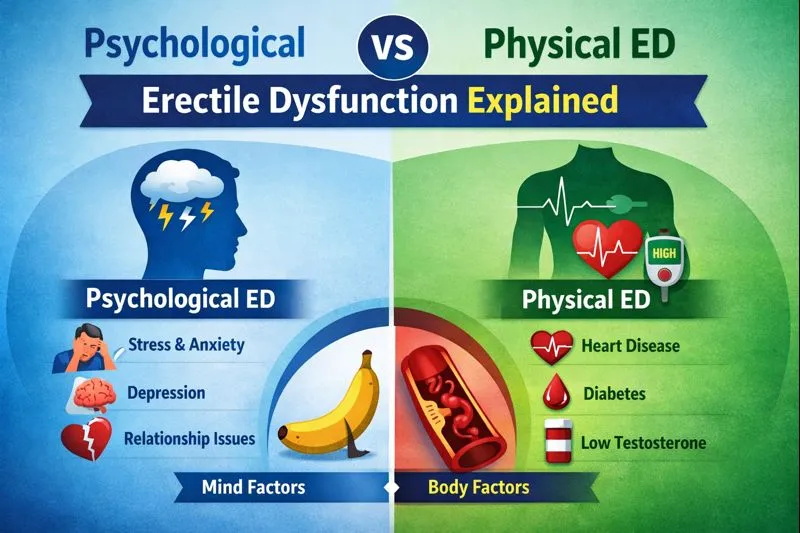
Erectile dysfunction (ED) is a common condition that affects men of all ages. While many people assume ED is always caused by physical health problems, the truth is that erectile dysfunction can be psychological, physical, or a combination of both. Understanding the difference is essential for choosing the right treatment and improving overall sexual health.
What Is Erectile Dysfunction?
Erectile dysfunction is defined as the persistent inability to achieve or maintain an erection firm enough for sexual activity. Erections are controlled by a complex interaction between the brain, nerves, blood vessels, hormones, and muscles. When any part of this system is disrupted, physically or mentally, erectile problems can occur.
What Is Psychological Erectile Dysfunction?
Psychological erectile dysfunction occurs when mental or emotional factors interfere with sexual arousal. In this type of ED, the body may be physically capable of an erection, but the brain fails to send the necessary signals.
Common Causes of Psychological ED
- Stress from work, finances, or life pressure
- Performance anxiety
- Depression or low mood
- Relationship conflicts
- Fear of sexual failure
- Low self-esteem
- Past negative sexual experiences
Psychological ED is more common in younger men, though it can affect men of any age.
Signs and Symptoms of Psychological ED
Psychological ED often shows distinct patterns, including:
- Sudden onset of erection problems
- Erections that work sometimes but not others
- Normal morning or nighttime erections
- Ability to get erections during masturbation, but difficulty during intercourse
- ED that worsens under stress or pressure
These signs suggest the physical erection mechanism is intact, but mental factors are interfering.
What Is Physical Erectile Dysfunction?
Physical (also called organic) erectile dysfunction is caused by medical conditions that affect blood flow, nerves, or hormone levels. In this case, the problem lies in the body rather than the mind.
Common Causes of Physical ED
- Diabetes
- High blood pressure
- Heart disease
- High cholesterol
- Obesity
- Low testosterone levels
- Nerve damage
- Side effects of medications
- Smoking, excessive alcohol use, or drug abuse
Physical ED becomes more common with increasing age, but younger men can also be affected.
Signs and Symptoms of Physical ED
Physical erectile dysfunction usually develops gradually and includes:
- Consistent difficulty getting or maintaining erections
- Weak erections that do not improve with stimulation
- Absence of morning or nighttime erections
- Reduced sexual desire in some cases
- ED that does not vary with mood or situation
These symptoms suggest an underlying medical or physiological issue.
Psychological vs Physical ED: Key Differences
| Feature | Psychological ED | Physical ED |
|---|---|---|
| Cause | Mental or emotional factors | Medical or physical conditions |
| Onset | Sudden | Gradual |
| Consistency | Inconsistent | Persistent |
| Morning erections | Usually present | Often absent |
| Age group | Common in younger men | More common with age |
| Stress impact | Strong influence | Minimal influence |
Can Erectile Dysfunction Be Both Psychological and Physical?
Yes. Many men experience mixed erectile dysfunction, where physical issues trigger psychological stress and anxiety, which then worsens the physical problem. For example, a man with mild physical ED may develop performance anxiety after a few failed attempts, creating a cycle that reinforces the condition.
How Erectile Dysfunction Is Diagnosed
Doctors diagnose ED by:
- Reviewing medical and sexual history
- Performing a physical examination
- Conducting blood tests (hormones, sugar, cholesterol)
- Evaluating mental health and stress levels
Accurate diagnosis is crucial to identify whether ED is psychological, physical, or mixed.
Treatment Options for Erectile Dysfunction
Treatment for Psychological ED
- Stress reduction techniques
- Counseling or sex therapy
- Cognitive Behavioral Therapy (CBT)
- Open communication with a partner
- Lifestyle improvements
- ED medications when appropriate
Treatment for Physical ED
- PDE-5 inhibitor medications
- Managing underlying health conditions
- Hormone therapy if testosterone is low
- Weight loss and regular exercise
- Quitting smoking and limiting alcohol
- Medical devices or procedures in severe cases
Lifestyle Tips to Improve Erectile Function
- Maintain a healthy weight
- Exercise regularly
- Eat a balanced diet
- Get quality sleep
- Manage stress effectively
- Avoid excessive alcohol and smoking
Healthy lifestyle habits support both physical and mental sexual health.
When to Seek Medical Help
You should consult a doctor if:
- ED lasts longer than a few weeks
- Erections suddenly worsen
- ED is accompanied by other health symptoms
- Emotional distress or relationship issues develop
Early treatment improves outcomes and overall well-being.
Frequently Asked Questions
Can stress alone cause erectile dysfunction?
Yes. Chronic stress and anxiety can interfere with sexual arousal and lead to psychological ED.
Is ED in young men usually psychological?
Often yes, but physical causes should always be ruled out.
Can physical ED be reversed?
In many cases, managing the underlying condition can significantly improve erectile function.
Do ED medications work for psychological ED?
They can help, but addressing the mental cause is essential for long-term success.
Conclusion
Psychological and physical erectile dysfunction have different causes but similar symptoms. Understanding the root cause is the key to effective treatment. With proper diagnosis, lifestyle changes, and medical or psychological support, most men can successfully manage ED and restore sexual confidence.
Comments (0)
Leave A Comment