

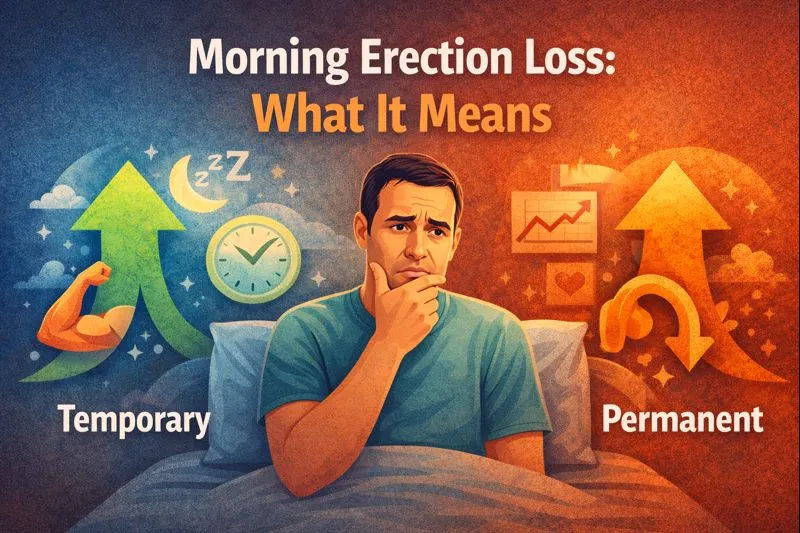
Morning erections are something many men experience for years without thinking much about them, until they start to fade or disappear. When that happens, it’s normal to feel concerned and wonder what it might mean for your sexual health. The truth is, losing morning erections isn’t always a serious problem, but in some cases, it can be a useful signal from the body.
Understanding why morning erections happen, and why they sometimes stop, can help you make sense of the change.
What Is a Morning Erection?
A morning erection, often called a sleep-related erection, happens during certain stages of sleep, especially during deeper sleep cycles. These erections are not usually linked to sexual thoughts or dreams. Instead, they are part of the body’s natural response to hormonal changes and relaxed nerve activity during sleep.
For many men, morning erections are a sign that the blood flow, nerves, and hormonal systems involved in erections are working normally.
Is Losing Morning Erections Normal?
Occasionally, missing a morning erection is very common. It can happen after a poor night’s sleep, a stressful day, or alcohol use. As men get older, morning erections may also become less frequent or less noticeable.
However, a consistent absence over a long period may be worth paying attention to, especially if other changes in sexual function appear at the same time.
Common Causes of Morning Erection Loss
Several everyday factors can interfere with morning erections, including:
- Poor or disrupted sleep
- Ongoing stress or anxiety
- Physical exhaustion or burnout
- Alcohol or substance use
In many cases, once these factors improve, morning erections may return naturally.
Hormonal Factors
Hormones, especially testosterone, play a role in sexual function and sleep-related erections. Testosterone levels tend to rise during sleep, which helps support morning erections.
Lack of quality sleep, irregular sleep schedules, or long-term stress can interfere with this hormonal rhythm. Some men may notice changes in energy, mood, or libido alongside the loss of morning erections.
Blood Flow and Vascular Health
Healthy blood circulation is essential for erections, including those that occur during sleep. If blood flow becomes less efficient over time, erections may feel weaker or occur less often.
Because the blood vessels involved in erections are small, changes here may show up earlier than other symptoms. This is one reason consistent morning erection loss is sometimes seen as a general health signal rather than a problem on its own.
Nerve Function and Sensitivity
Nerves play a key role in triggering erections during sleep. Conditions that affect nerve signals—such as long-term blood sugar issues or nerve-related conditions—can reduce the body’s ability to produce spontaneous erections.
Changes in sensation or responsiveness may sometimes accompany this type of issue.
Lifestyle Factors
Daily habits strongly influence erectile health, including morning erections.
Lifestyle factors that may contribute include:
- Smoking or nicotine use
- Lack of physical activity
- Poor diet
- Irregular or insufficient sleep
Positive lifestyle changes often support better sleep quality and healthier erections over time.
Psychological vs Physical Causes
One reason morning erections are often discussed is that they can help distinguish between mental and physical factors. When morning erections are present but erections during sexual activity are difficult, stress or anxiety may be playing a larger role.
When both morning erections and sexual erections decline together, physical or lifestyle factors may be more likely contributors.
When Morning Erection Loss May Signal ED
Morning erection loss may deserve closer attention if:
- It happens consistently over weeks or months
- Erections during sexual activity also feel weaker
- The change develops gradually rather than suddenly
Patterns over time are often more meaningful than isolated changes.
Can Morning Erections Return?
In many cases, yes. Morning erections may return after:
- Improving sleep habits
- Reducing stress
- Making healthier lifestyle choices
- Addressing underlying health concerns
Changes often happen gradually, and patience is important.
When to Seek Medical Advice
It may be helpful to talk to a healthcare professional if:
- Morning erections have been absent for a long time
- Sexual performance has also changed noticeably
- Other symptoms, such as fatigue or low energy, appear
Early conversations can help identify contributing factors and provide reassurance.
Conclusion
Losing morning erections can feel worrying, but it’s often linked to sleep, stress, lifestyle, or temporary changes. While consistent absence may signal something worth checking, it does not automatically mean a serious problem. Paying attention to overall health, sleep quality, and daily habits can provide valuable clues and often lead to improvement.
Comments (0)
Leave A Comment