Impotence vs Erectile Dysfunction: Meaning, Causes and When to Get Help
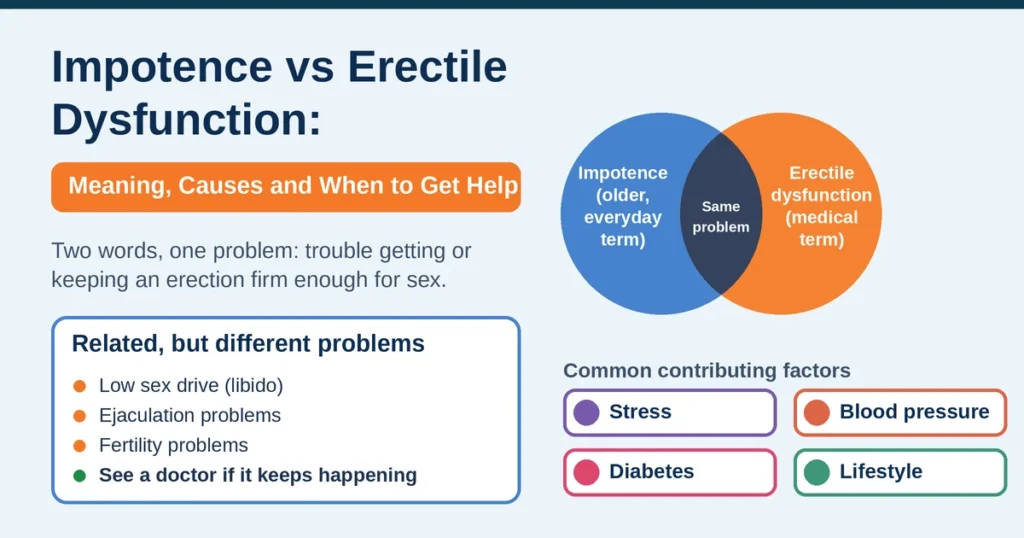
Impotence and erectile dysfunction (ED) are often used as if they mean the same thing, and in everyday conversation they usually do. Both describe difficulty getting or keeping an erection firm enough for sex. The main difference is the vocabulary. Doctors now prefer the term erectile dysfunction because it is more precise, less judgemental, and does not blur together other sexual problems that have different causes.
This guide explains how the two terms relate, why the medical language changed, which related problems are sometimes lumped in under “impotence”, what commonly causes ED, and when it is sensible to see a doctor. It also covers the main treatments, with a short section on buying medicines safely online.
Key Points at a Glance
- In practice, “impotence” is the older, informal word for what medicine now calls erectile dysfunction.
- ED means being unable to get an erection, or unable to keep one long enough for sex.
- The NHS describes ED as very common, particularly in men over 40, and usually nothing to worry about when it happens occasionally.
- Frequent ED can be linked to conditions such as high blood pressure, high cholesterol, diabetes, depression, anxiety, or hormone problems, so it is worth getting checked.
- Effective treatments exist, and the right choice depends on the cause and on your overall health.
Impotence vs Erectile Dysfunction: The Short Answer
If someone says “impotence” in the context of erections, they almost always mean erectile dysfunction. Health services still use both words side by side. For example, the NHS 111 Wales information page is titled “Erectile dysfunction (impotence)” so that people searching under either term find it.
| Feature | “Impotence” | Erectile dysfunction (ED) |
|---|---|---|
| Where it is used | Everyday speech, older writing, some search queries | Clinical guidance, research, and most health services |
| Typical meaning today | Trouble with erections, though sometimes used loosely for other sexual problems | Unable to get an erection, or unable to keep one long enough for sex |
| Tone | Can sound judgemental or final | Neutral and descriptive |
| Precision | Can blur erections, desire, ejaculation, and fertility | Refers specifically to erection difficulty |
The practical takeaway is simple. You do not need to use a particular word to be taken seriously. A doctor will understand either term, and the questions they ask will be the same.
Why the Medical Term Changed
The word impotence carries the sense of powerlessness, and many men found it stigmatising. It also covered a lot of ground. Historically it was used for several different problems at once, including trouble with erections, a lack of sexual desire, difficulty ejaculating, and even difficulty fathering a child. Lumping these together made it hard to describe or treat any of them clearly.
Medical bodies began favouring “erectile dysfunction” from the early 1990s onward because it describes one specific problem: the erection. That precision matters. Low sex drive, early ejaculation, and fertility problems each have their own causes and their own treatments, and a man may have one without the others.
What People Sometimes Mean by “Impotence”
When people search for impotence, they are not always describing ED in the strict sense. It helps to separate the possibilities, because the right next step differs.
Erectile Dysfunction
This is the core meaning. The NHS describes it as being unable to get an erection or unable to keep an erection long enough to have sex. Depending on the cause, you may still get erections at other times, for example when you wake up. That detail can be a useful clue for a doctor, as discussed below.
Low Sex Drive
Low libido means reduced interest in sex. It is a different problem from ED, although the NHS notes that some men with ED also have a low sex drive. Low libido can be linked to stress, mood problems, relationship difficulties, some medicines, or hormone issues.
Ejaculation Problems
Ejaculating too quickly, too slowly, or not at all are separate issues from getting an erection. Premature ejaculation is the most common of these. Our guide on erectile dysfunction and premature ejaculation explains how the two overlap without being the same condition.
Fertility Problems
Difficulty fathering a child is a fertility issue. A man can have ED and normal fertility, or an erection that works perfectly well alongside a low sperm count. If you are trying for a baby and have concerns, a fertility assessment is a separate conversation from one about erections.
How Common Is Erectile Dysfunction?
NHS information describes ED as very common, particularly in men over 40. It is also not limited to older men. Younger men can experience it, often in connection with stress, anxiety, alcohol, or relationship pressure. The important point is that most men will have trouble getting or keeping an erection at some point, and a single episode does not mean there is a lasting problem.
If you have noticed erections fading sooner than they used to, our article on why erections don’t last as long anymore looks at common reasons. For age-related questions, see erectile dysfunction in men over 45.
What Causes Erectile Dysfunction?
Erections depend on healthy blood flow, working nerves, hormones, and a relaxed mind. A problem in any of these areas can interfere. The NHS separates the picture into everyday triggers and underlying conditions.
Everyday and Occasional Triggers
According to NHS information, most men occasionally fail to get or keep an erection. This is usually caused by stress, tiredness, or drinking too much alcohol, and it is nothing to worry about. ED can also be a side effect of some medicines, which is worth raising with a doctor or pharmacist rather than stopping anything on your own.
Conditions Linked to Frequent ED
If ED happens often, the NHS says it may be caused by a condition such as:
- High blood pressure or high cholesterol. Both can affect blood vessels, including those that supply the penis.
- Diabetes. Over time, high blood sugar can damage nerves and blood vessels. Our article on diabetes and severe erectile dysfunction explains the link.
- Depression or anxiety. Mood and worry directly affect arousal.
- Hormone problems. Hormonal imbalances can reduce desire and affect erections.
Because ED can sit alongside these conditions, it is sometimes the first noticeable sign that something else needs attention. That is one of the strongest reasons to get persistent ED checked rather than simply hoping it passes.
Lifestyle Factors
NHS Wales guidance lists several habits that matter. It suggests losing weight if you are overweight, stopping smoking, eating a healthy diet, exercising daily, and trying to reduce stress and anxiety. It also advises not drinking more than 14 units of alcohol a week and, for people who cycle more than three hours a week, taking a break from cycling for a while.
Psychological Factors
Stress, depression, and performance worries can all interfere with erections, even when the body is physically healthy. A man who loses an erection once may start to worry about it happening again, and that worry can make it more likely. We cover this in depth in our pieces on performance anxiety and ED and stress-induced erectile dysfunction.
Is It Physical or Psychological?
Doctors often try to work out whether the main driver is physical, psychological, or a mix of both. The two frequently overlap. A man with a physical cause may develop anxiety about performance, and a man with an anxiety-driven problem may find that it gradually starts to affect his general health habits.
One clue is whether erections still occur in other situations. NHS information notes that, depending on the cause, you may still get an erection when you wake up. Erections that work in some situations but not others can point toward a psychological component, while a gradual, consistent decline can suggest a physical cause. This is only a rough guide, and it should never replace a medical assessment. Our explainer on psychological versus physical ED goes into more detail.
When to See a Doctor
The NHS advises seeing a GP or going to a sexual health clinic if erection problems keep happening. It may be a sign of a health condition that can be treated. In many places, sexual health clinics offer walk-in services and can provide the same treatment you would get from a family doctor.
Seek medical advice sooner if ED comes with other symptoms, such as chest pain, breathlessness, numbness, needing to pass urine more often, or low mood. ED that starts suddenly after a new medicine, an injury, or surgery also deserves prompt attention.
What Happens at the Appointment
According to NHS information, the doctor or nurse may:
- Ask about your lifestyle, relationships, and any problems you are having.
- Do basic health checks, such as taking your blood pressure.
- Examine your genitals to rule out any obvious physical cause.
- Consider a prostate examination if you also have symptoms such as needing to pass urine more often than usual.
Many men feel embarrassed before the visit and relieved afterwards. Doctors and nurses talk about erection problems routinely, and the questions are practical rather than personal for their own sake.
Treatments for Erectile Dysfunction
The NHS notes that treatment can usually help improve ED. The best option depends on the cause, your general health, and what you prefer.
Lifestyle Changes
Healthy habits can sometimes improve ED on their own, and they support every other treatment. Regular activity, a balanced diet, a healthy weight, stopping smoking, and keeping alcohol within recommended limits all help blood vessels and nerves work well.
PDE5 Inhibitor Medicines
The main treatments are medicines that increase blood flow to the penis, called PDE5 inhibitors. The NHS lists four: sildenafil (Viagra), tadalafil (Cialis), vardenafil (Levitra), and avanafil (Spedra). In the UK, sildenafil can be obtained on prescription or bought from a pharmacy, while the others need a prescription. Rules differ elsewhere, so check what applies where you live. These medicines work only when a man is sexually aroused. You can read how they work in our explainer on PDE5 inhibitors.
The NHS medicine page for tadalafil says that some people with erection problems are told to take one tablet about 30 minutes before sex, with no more than one tablet a day because the effects can last up to 36 hours. Others take one tablet at the same time every day. For more on timing, see how long tadalafil 20 mg lasts.
If a medicine seems to have stopped working, there are usually explanations worth checking before assuming the worst. Our article on ED pills not working lists common reasons.
Vacuum Pumps
Vacuum pumps draw blood into the penis to produce an erection. NHS information says they work for most men and can be used when medicine is unsuitable or ineffective. They are not always available on the NHS, so ask a doctor where to get one.
Treating the Underlying Cause
Sometimes the best treatment for ED is treating something else. A doctor may switch you to a different medicine if your current one is causing the problem. High blood pressure, high cholesterol, and hormone problems may be treated with medicine. Counselling and therapy can help when erection problems are linked to emotional or mental health difficulties, although waiting lists for these services can be long. Private counsellors and sex therapists are an alternative, and it is sensible to choose someone registered with a recognised professional body.
Safety Points With ED Medicines
| Issue | Why it matters |
|---|---|
| Nitrate medicines | PDE5 inhibitors are not usually prescribed alongside nitrates used for chest pain, because the combination can cause a dangerous drop in blood pressure. |
| Heart and blood pressure | A doctor needs to confirm that your heart is fit enough for sexual activity and that the medicine suits your condition. |
| Alcohol | Alcohol can reduce erection quality and, combined with some medicines, may add to dizziness. |
| Prolonged erection | An erection that is painful or lasts too long is an emergency and needs urgent medical help. |
| Sudden vision or hearing changes | Rare but serious. Stop and seek urgent medical care. |
| Taking more than prescribed | A higher dose does not mean a better result and can raise the chance of side effects. |
Buying ED Medicines Online: Take Care
Many men prefer to order discreetly online, and that is understandable. NHS Wales guidance is clear about the risks, however. It warns that many websites sell fake medicines, that online medicines are not always regulated, and that the ingredients can vary from one pack to another. Fake or incorrect products can cause unpleasant side effects or may not suit you.
The NHS advice is that it is best to see a doctor before buying medicines online, because a doctor knows your medical history and can discuss whether you would benefit from treatment. For UK purchases, it recommends checking that the online pharmacy is registered with the General Pharmaceutical Council and that any doctors involved are registered with the General Medical Council. If you live elsewhere, look for the equivalent national regulator.
Strength is another point to watch. NHS prescribing guidance for ED lists tadalafil tablets at 2.5, 5, 10, and 20 mg. A tablet stronger than 20 mg is outside those listed strengths, and a higher dose is not automatically a better one. If you are offered a stronger tablet, speak to a prescriber before taking it.
Talking About ED
Shame keeps many men from seeking help for years. A few approaches make the conversation easier:
- Say it plainly. “I have been having trouble with erections” is enough for a doctor to start.
- Consider a sexual health clinic if a family doctor feels awkward. Many offer walk-in appointments.
- Talk to your partner. Without an explanation, a partner may assume loss of interest, which adds pressure for both of you.
- Bring a list of your medicines, including supplements, so the doctor can check for side effects.
Common Misconceptions
- “Impotence means infertility.” The two are different. ED affects the erection, while fertility depends on sperm and other factors.
- “ED is just part of getting older.” It becomes more common with age, but it is not inevitable, and it is usually treatable.
- “It is all in the mind.” Psychological causes are common, but physical conditions such as diabetes or high blood pressure are also frequent contributors.
- “A pill is the only fix.” Medicines help many men, but lifestyle changes, therapy, devices, and treating underlying conditions all play a part.
- “Online pills are all the same.” Quality varies, and fake products are a recognised problem.
Frequently Asked Questions
Is impotence the same as erectile dysfunction?
In everyday use, yes. Impotence is the older, informal word, and erectile dysfunction is the preferred medical term. Some health pages list both together.
Why do doctors say erectile dysfunction instead of impotence?
The newer term is more precise and less stigmatising. Impotence was sometimes used loosely for several different sexual problems, which made them harder to describe and treat.
Is erectile dysfunction permanent?
Not necessarily. The NHS says treatment can usually help improve ED. Whether it resolves depends on the cause, and some causes, such as stress, tiredness, or alcohol, are temporary.
Can stress cause erectile dysfunction?
Yes. The NHS lists stress, tiredness, and heavy drinking as typical reasons for occasional erection problems. Ongoing anxiety or depression can also contribute to persistent ED.
Should I see a doctor for occasional erection problems?
Occasional problems are common and usually not a concern. See a doctor or sexual health clinic if it keeps happening, since it can signal a treatable health condition.
Do I need a prescription for ED medicine?
It depends on the medicine and the country. According to NHS information, in the UK sildenafil can be bought from a pharmacy, while tadalafil, vardenafil, and avanafil need a prescription. Check the rules where you live.
Is it safe to buy ED pills online?
It carries risks. NHS guidance warns that many websites sell fake medicines and that ingredients can vary. Seeing a doctor first and using only properly regulated pharmacies is the safer route.
Can lifestyle changes really help?
They can sometimes help. NHS guidance suggests losing weight if needed, stopping smoking, eating well, exercising, reducing stress, and limiting alcohol.
Conclusion
Impotence and erectile dysfunction describe essentially the same problem. The newer term is clearer and kinder, and it separates erection trouble from low desire, ejaculation difficulties, and fertility. ED is common, often treatable, and sometimes a signal that something else in your health deserves attention. If it keeps happening, a conversation with a doctor or sexual health clinic is the sensible next step, and it is better to start that conversation than to wait. Whichever treatment you consider, choose properly regulated sources, avoid higher strengths than a prescriber has advised, and treat lifestyle habits as part of the plan.
Medical disclaimer: This article is for general information and does not replace advice from a doctor or pharmacist. Do not start, stop, or change any medicine without speaking to a qualified healthcare professional. If you have chest pain, an erection that will not go away, or sudden changes in vision or hearing, seek urgent medical care.
Sources