Why Erections Become Weaker With Age
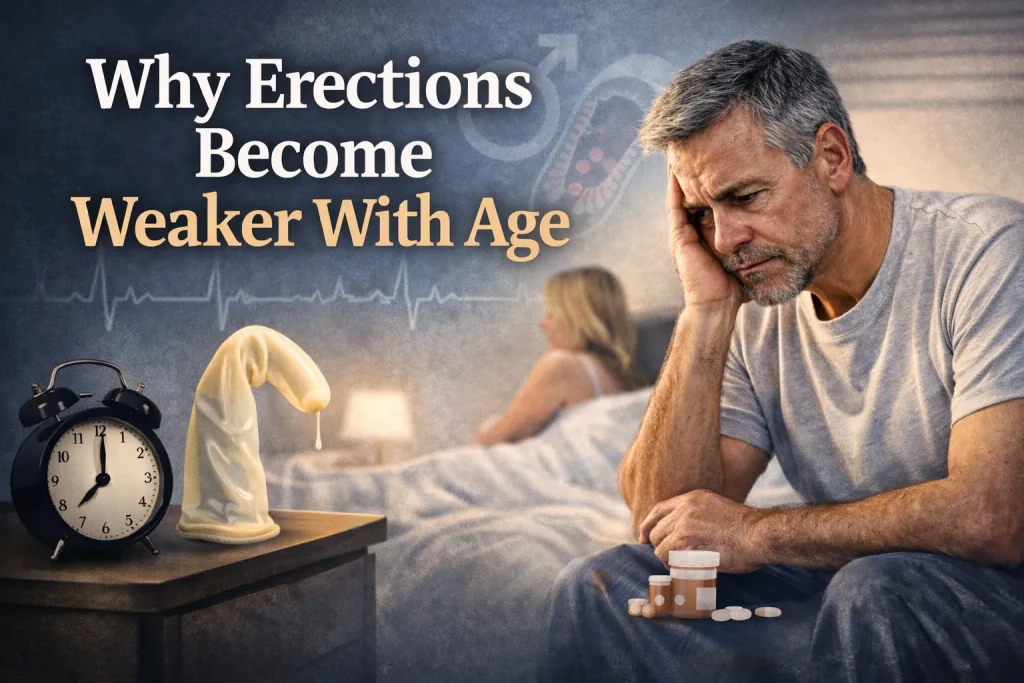
As men get older, many notice changes in their sexual performance, particularly erections that are not as firm, reliable, or long-lasting as they once were. This can be frustrating, confusing, and sometimes worrying. The good news is that weaker erections are common, understandable, and in most cases treatable.
Aging does not mean the end of a satisfying sex life. Understanding why erections change with age is the first step toward improving them.
How Erections Work: A Quick Refresher
An erection is the result of a complex interaction between the brain, hormones, nerves, blood vessels, and muscles.
When a man becomes sexually aroused:
- The brain sends signals through nerves to the penis
- Blood vessels relax and widen
- Blood flows into the erectile tissue
- Nitric oxide helps maintain firmness
If any part of this process weakens, erections may become softer or harder to maintain.
Reduced Blood Flow With Age
One of the most common reasons erections weaken with age is reduced blood flow.
As men grow older:
- Arteries lose elasticity
- Blood vessels narrow due to plaque buildup (atherosclerosis)
- Blood flow to the penis becomes less efficient
Because the penile arteries are small, they are often affected earlier than the heart arteries. This is why erectile dysfunction (ED) can sometimes be an early warning sign of cardiovascular disease.
Declining Testosterone Levels
Testosterone levels naturally decline by about 1% per year after age 30–40.
Lower testosterone can lead to:
- Reduced sexual desire (libido)
- Decreased erection strength
- Lower energy and stamina
While testosterone doesn’t directly cause erections, it plays a key role in sexual motivation and nitric oxide production, both of which influence erection quality.
Changes in Nerve Sensitivity
Aging can slow nerve function throughout the body, including the nerves responsible for sexual stimulation.
This may result in:
- Reduced penile sensitivity
- Slower arousal
- Weaker signaling between the brain and the penis
Conditions such as diabetes, nerve damage, or spinal issues can further worsen nerve-related erectile problems.
Increase in Health Conditions Over Time
As men age, they are more likely to develop health conditions that affect erections, including:
- Diabetes
- High blood pressure
- High cholesterol
- Obesity
- Heart disease
These conditions damage blood vessels and nerves, making strong erections more difficult to achieve and maintain.
Medication Side Effects
Many medications commonly prescribed after age 40–50 can interfere with erectile function.
Common culprits include:
- Blood pressure medications
- Antidepressants
- Anti-anxiety drugs
- Prostate medications
- Hormonal treatments
Never stop medications without consulting a doctor, but alternatives or adjustments may help reduce sexual side effects.
Lifestyle Factors Accumulated Over Time
Long-term lifestyle habits have a powerful impact on erections.
Factors that weaken erections include:
- Smoking (damages blood vessels)
- Excessive alcohol use
- Lack of physical activity
- Poor diet and weight gain
These habits reduce circulation, hormone balance, and overall sexual health.
Psychological Factors and Mental Health
Mental and emotional health play a major role in erectile function, especially with age.
Common psychological contributors include:
- Performance anxiety
- Stress and work pressure
- Depression
- Relationship concerns
One episode of erectile difficulty can lead to fear of recurrence, creating a cycle that worsens the problem.
Slower Arousal and Recovery
Aging also affects the timing of sexual response.
Men may notice:
- Needing more stimulation to become aroused
- Fewer spontaneous erections
- A longer recovery (refractory) period after ejaculation
These changes are normal and do not mean sexual enjoyment is lost—they simply require adjustment.
Are Weaker Erections a Normal Part of Aging?
Some change is normal, but persistent erectile dysfunction is not something men should ignore.
Weaker erections are treatable, and in many cases, ED signals underlying health issues that deserve attention. Seeking medical advice early can improve both sexual and overall health.
How to Maintain Stronger Erections With Age
Many men can significantly improve their erection quality through:
- Regular exercise (especially cardiovascular activity)
- Healthy diet and weight management
- Quitting smoking and limiting alcohol
- Stress reduction and better sleep
- Pelvic floor (Kegel) exercises
- Medical treatments, when appropriate
- Open communication with a partner
Modern treatments are effective, safe, and widely available.
Conclusion
Erections may change with age, but a fulfilling sex life does not have to disappear. Weaker erections are usually the result of physical, hormonal, or lifestyle factors, not a loss of masculinity or desire.
With the right knowledge, healthy habits, and medical support when needed, men can maintain confidence, intimacy, and sexual satisfaction well into later life.