Erectile Dysfunction in Men Over 45
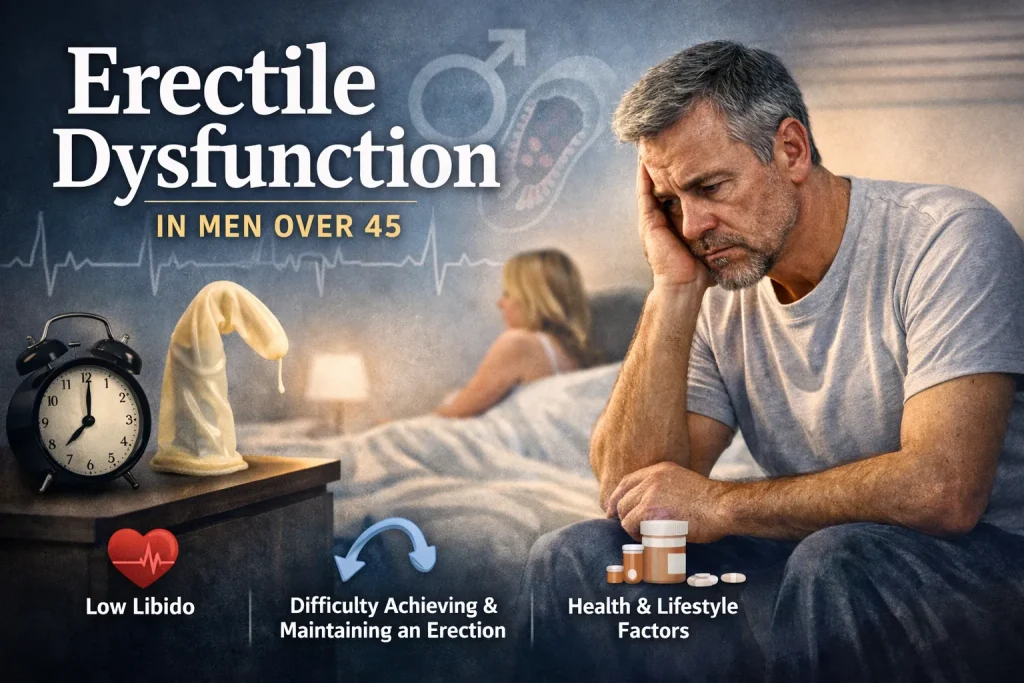
Erectile dysfunction (ED) becomes increasingly common as men cross the age of 45. While occasional erection problems can happen at any age, persistent difficulty getting or maintaining an erection after 45 often signals underlying physical or psychological changes that shouldn’t be ignored.
The good news? Erectile dysfunction after 45 is treatable and, in many cases, reversible when addressed early.
How Common Is Erectile Dysfunction After 45?
ED affects millions of men worldwide, and age is one of the strongest risk factors.
- Around 40–50% of men over 45 experience some degree of erectile difficulty
- The risk increases steadily with each decade
- Many men delay seeking help due to embarrassment or believing ED is “normal aging.”
While aging contributes to ED, erection problems are not inevitable and should never be dismissed.
Main Causes of Erectile Dysfunction in Men Over 45
Age-Related Hormonal Changes
After 45, testosterone levels gradually decline. Lower testosterone can reduce:
- Sexual desire (libido)
- Erection firmness
- Overall sexual stamina
Hormonal imbalance alone may not cause ED, but it often worsens existing erection issues.
Reduced Blood Flow to the Penis
Healthy erections rely on strong blood flow. With age:
- Arteries narrow
- Blood vessels become less flexible
- Plaque buildup reduces circulation
This is why ED is often an early warning sign of heart disease.
Chronic Health Conditions
Certain medical conditions become more common after 45 and directly impact erections:
- Diabetes (nerve and blood vessel damage)
- High blood pressure
- High cholesterol
- Obesity
- Metabolic syndrome
Men with multiple conditions face a significantly higher ED risk.
Psychological Factors
Mental health plays a bigger role than many men realize:
- Work stress
- Financial pressure
- Performance anxiety
- Depression or low self-esteem
Psychological ED often appears as inconsistent erections, good some days, poor on others.
Side Effects of Medications
Many men over 45 take long-term medications that can interfere with erections, including:
- Blood pressure medicines
- Antidepressants
- Prostate drugs
- Anxiety medications
Never stop medication without medical advice, but alternatives often exist.
Early Warning Signs Men Over 45 Should Not Ignore
ED rarely appears overnight. Common early signs include:
- Loss of morning erections
- Erections that fade quickly
- Needing more stimulation than before
- Reduced sexual desire
- ED that comes and goes
Catching ED early improves treatment success.
Is Erectile Dysfunction After 45 Reversible?
Yes, in many cases.
ED caused by lifestyle factors, stress, mild hormonal imbalance, or early vascular changes can often be improved or reversed. Long-standing or severe ED may require medical treatment, but even then, effective options are available.
The key is early diagnosis and consistent treatment.
Best Treatment Options for Erectile Dysfunction Over 45
Lifestyle Changes That Improve ED
Simple daily habits can dramatically improve erection quality:
- Regular exercise (especially cardio)
- Weight loss
- Quitting smoking
- Limiting alcohol
- Managing stress
- Getting quality sleep
Even modest improvements can restore natural erections.
Oral ED Medications
Prescription ED pills remain the most effective treatment for many men over 45.
They work by increasing blood flow to the penis during sexual stimulation.
Common benefits:
- Stronger erections
- Longer-lasting performance
- Improved confidence
Choosing the right medication and dose is essential for the best results.
Hormone Therapy (When Needed)
If testosterone levels are significantly low, hormone therapy may help:
- Improve libido
- Enhance the erection response
- Increase energy and mood
Hormone treatment is not for everyone and should be medically supervised.
Natural & Supportive Treatments
Supportive measures can enhance medical therapies:
- Heart-healthy diet
- Stress-reduction techniques
- Targeted supplements (only with medical guidance)
Natural methods work best alongside, not instead of, proven treatments.
When Should Men Over 45 See a Doctor?
Medical evaluation is essential if:
- ED lasts longer than 3 months
- Erections suddenly worsen
- ED is accompanied by fatigue, chest pain, or shortness of breath
- ED medications stop working
Doctors may check:
- Blood sugar
- Cholesterol
- Hormones
- Heart health
ED is often a signal, not just a symptom.
How to Prevent Erectile Dysfunction After 45
Prevention focuses on protecting blood vessels and hormones:
- Stay physically active
- Maintain a healthy waistline
- Control blood pressure and diabetes
- Reduce stress
- Schedule regular health checkups
Men who prioritize overall health enjoy better sexual health.
Myths About Erectile Dysfunction in Men Over 45
“ED is normal after 45.”
❌ Common, but not normal—and definitely treatable.
“ED pills are unsafe for older men.”
❌ When used correctly, they are safe for most men.
“Nothing can be done.”
❌ False. Modern treatments are highly effective.
FAQs About Erectile Dysfunction in Men Over 45
Is ED normal after age 45?
ED becomes more common with age, but it is not something men must accept.
Can stress alone cause ED at this age?
Yes. Stress and anxiety can significantly affect erections, even with good physical health.
Which ED pill works best for men over 45?
The best option depends on health, lifestyle, and frequency of sexual activity.
Can ED be the first sign of heart disease?
Yes. ED often appears before heart symptoms.
Can lifestyle changes really reverse ED?
In early or moderate cases, lifestyle changes can make a major difference.
Final Thoughts
Erectile dysfunction in men over 45 is common, but it’s not something you have to live with. Whether caused by aging, health conditions, or stress, modern treatments and lifestyle changes offer real solutions.
Taking action early protects not only sexual health but overall well-being.